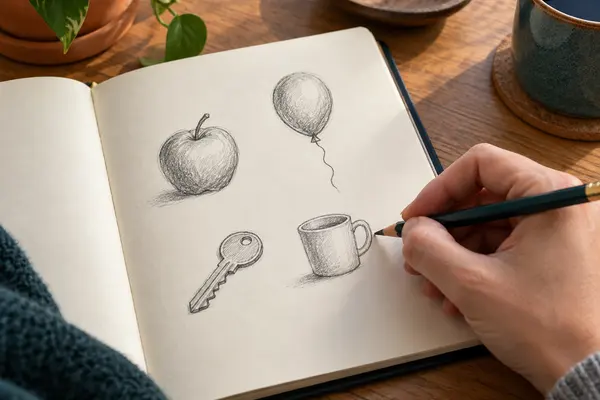
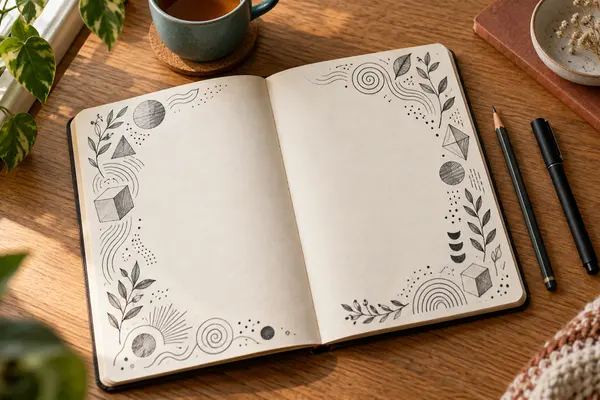
- Doodle while you listen
- Sketch the idea
- Use your own words
- Neatness optional
DOODLING · 2009
Shade while you listen
Simple doodling during a dull message went with 29% better recall in a surprise test.
See the experiment doodlenotebook
Updated
WHAT THE RESEARCH SAYS
Those spirals and shaded boxes may be helping, not distracting.
Doodling is often taken as a sign of a wandering mind. Memory studies suggest otherwise: simple doodles helped listeners stay on task, and a quick sketch of an idea is easier to remember than the same idea written out. Here is the evidence, in plain English.
Plain English, with the sources linked.
DOODLE then recall
Check your notebook habit
THE SHORT ANSWER
Three findings about what you do
on the page while you think.
DOODLING · 2009
Simple doodling during a dull message went with 29% better recall in a surprise test.
See the experimentDRAWING · 2016
Drawing a word beat writing it out, often with more than twice as many words recalled.
How quick a sketch?NOTE-TAKING · 2021
Pen versus laptop made little measurable difference; word-for-word copying went with lower scores.
Check your habitA QUICK HABIT CHECK
Pick what your pen usually does in a long talk, call or lecture. Each answer shows what one of the studies on this page found.
These are single studies of specific tasks, not guarantees. They describe averages across groups of people.
TWO EXPERIMENTS WORTH KNOWING
Neither study asked for good art.
Both asked for a pencil.
7.5 vs 5.8
Names recalled in a surprise test
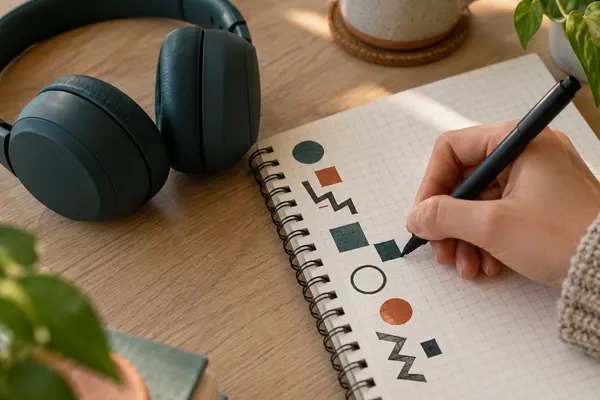
Forty people heard a two-and-a-half-minute phone message about a party. Half shaded shapes as they listened. Nobody was told memory would be tested, yet the doodlers recalled 29% more.
DOODLING · 2009
Often 2×
Words recalled after drawing vs writing
Students had 40 seconds to either draw a simple word such as "apple" or write it out repeatedly. They often recalled more than twice as many drawn words. Drawing quality did not seem to matter.
DRAWING · 2016
Both studies used short lists and simple tasks. They show that a pencil does not have to be a distraction, not that every kind of doodle helps every kind of learning.
TRY IT TODAY
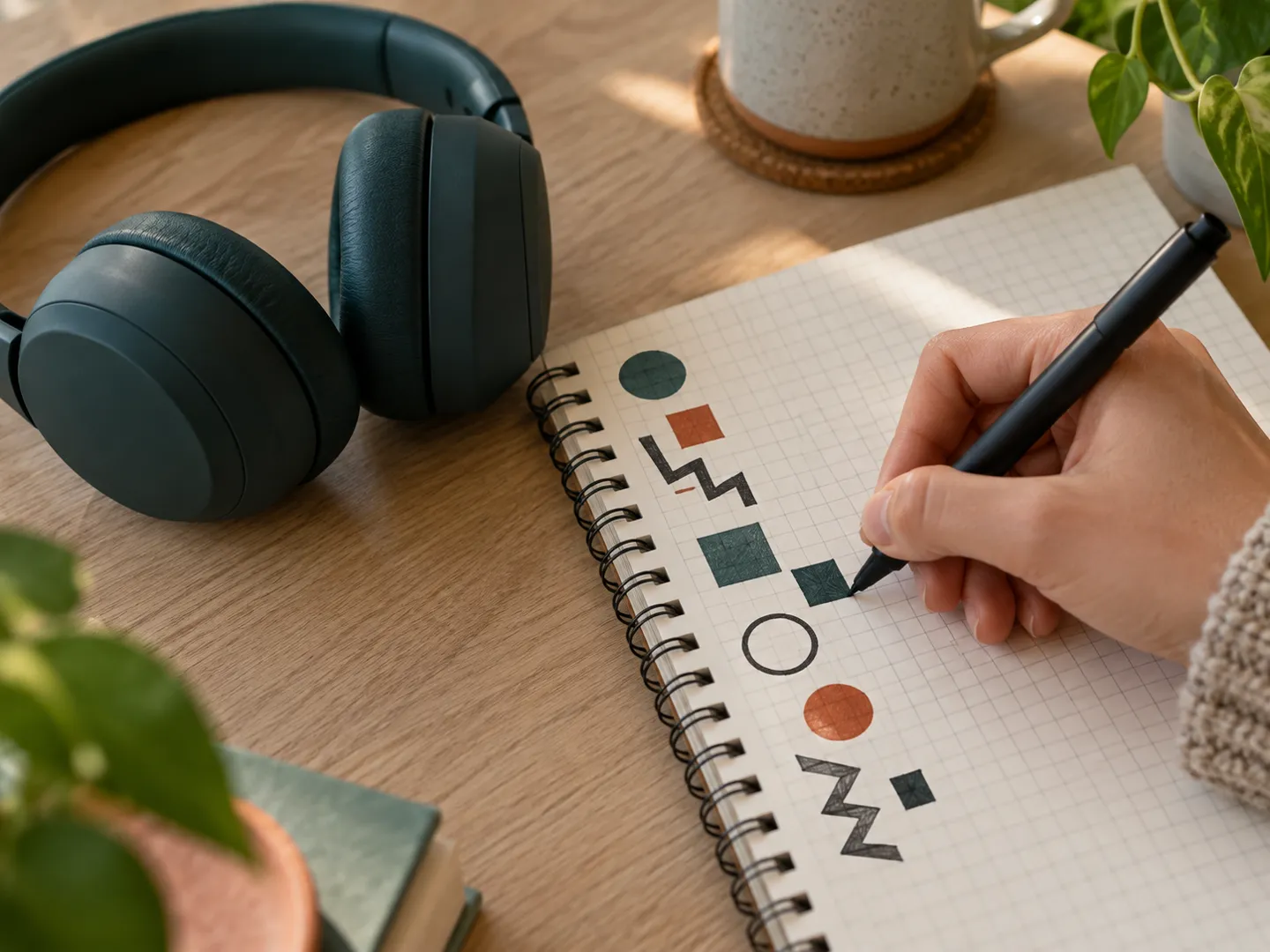
In the 2009 study, doodlers shaded shapes without worrying about neatness. Boxes, spirals and hatching are enough.
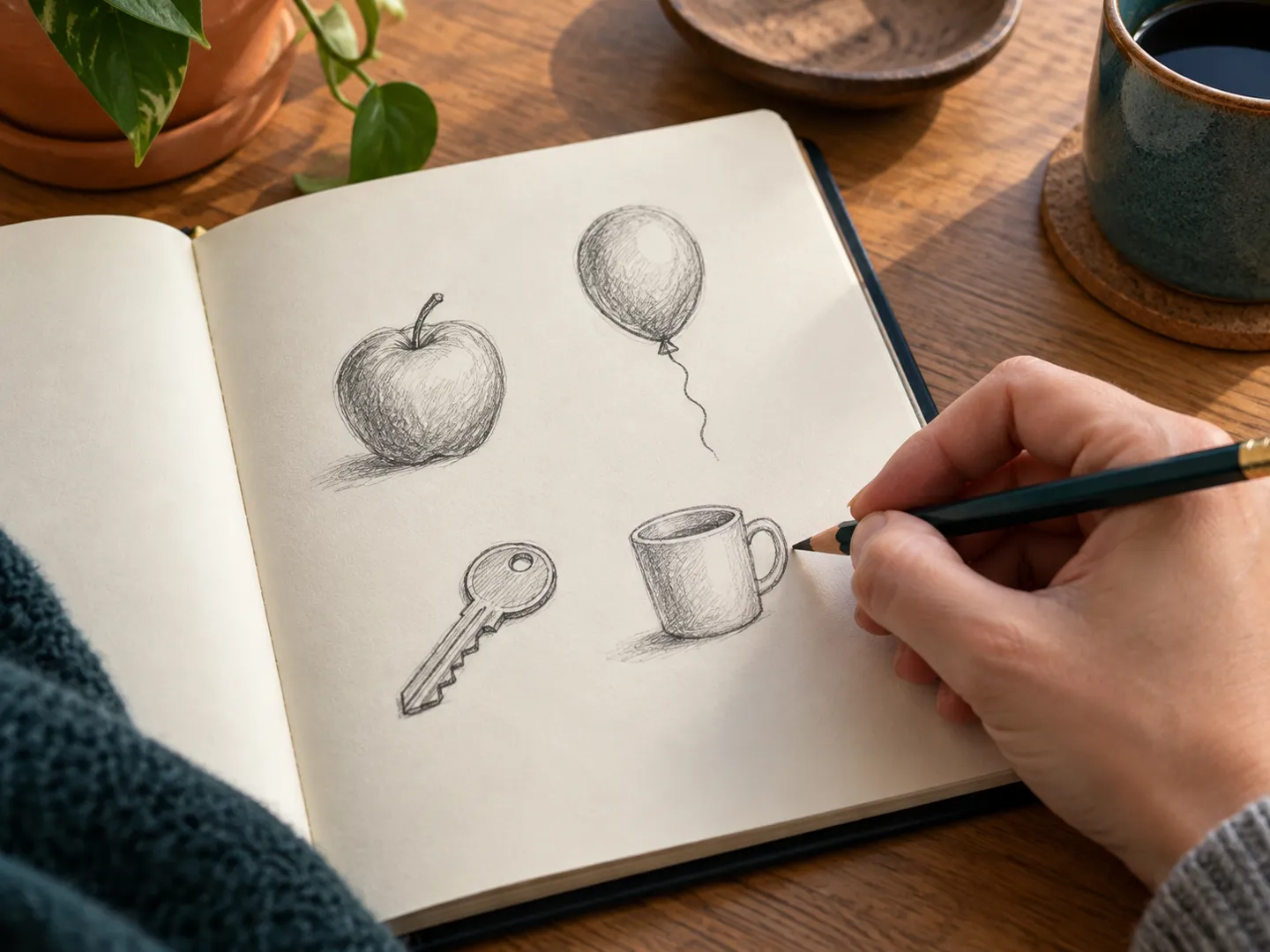
When something matters, draw a quick picture of it beside your note. A rough sketch counts.
Resist copying every word. Short notes that rephrase the point went with better quiz scores in both note-taking studies.
Leonardo collected first and planned to sort by subject afterwards. Let the notebook be messy, then review it.
NOTEBOOK FACTS
In Jackie Andrade's 2009 study at the University of Plymouth, people who shaded shapes while listening recalled 7.5 names against 5.8 for those who did not: 29% more.
The University of Waterloo team found the drawing benefit even when people had only 4 seconds to sketch each word, and the quality of the drawing did not seem to matter.
A 2018 Waterloo study found drawing helped both students and older adults remember words, and the benefit was especially large in the older group.
A 2020 study recorded brain activity with 256 sensors in 12 young adults and 12 twelve-year-olds. Writing by hand produced activity the authors link to memory and learning.
The British Library's Codex Arundel holds 283 leaves of Leonardo da Vinci's notes and drawings from 1478 to 1518. He called it "a collection without order".
QUICK QUESTIONS
Short answers to the questions people ask most.
Does doodling mean someone is not paying attention?
Not necessarily. In a 2009 University of Plymouth study, people who shaded shapes while listening to a dull phone message recalled 29% more in a surprise memory test than people who just listened. The researcher suggested simple doodling may help people stay focused on boring tasks.
Do I need to be good at drawing for it to help?
No. In the University of Waterloo drawing studies, the quality of the drawings did not appear to matter. People with any level of artistic skill showed the memory benefit.
How long do I need to spend drawing?
Not long. The main experiments gave people 40 seconds per word, but in a later version people had only 4 seconds to draw and still showed a large memory advantage over writing.
Is it better to take notes by hand or on a laptop?
The evidence is mixed. A 2014 study favoured handwriting, but a 2021 replication with 145 students found only small, non-significant differences in quiz scores. Notes in your own words, rather than word-for-word copies, went with better scores in both.
Does drawing help memory in older adults too?
Yes, according to a 2018 University of Waterloo study. Both students and older adults remembered more when they drew than when they wrote, and the benefit was especially large in the older group.
A NAME WORTH WRITING DOWN
doodlenotebook.com is part of the DoodleSale portfolio. It isn't in an auction right now, but you can ask about leasing it.